Monday, 10 June 2013

Reflective log14.05.13: low arousal- oral desensitisation program


1. Think of a recent therapy session or event.
I had a 104 year old client with a large LMCA stroke who was very low arousal. Her family were keen for her to have oral trials/ a swallow assessment but she was unable to follow instructions or to functionally communicate and was not alert enough to be safe for a swallow assessment. I completed the WHIM with her while giving her mouthcare/ in joint OT sessions. Initially the patient did not like the oral sponges so I used a toothbrush instead and hand over hand facilitation.

2. Describe the session/experience
I developed an oral desensitisation program for the patient which her family could complete with her. My rationale was that she was refusing mouthcare (tuning her head and closing her lips). If she would engage with mouthcare perhaps she could then progress onto oral trials/ a swallow assessment. Furthermore her family would have a concrete task that they could use to interact with her.

3. What did this session make you feel?
I felt like I was able to handover a useful task for the patients family to do with her, which would make them feel more useful and feel like we were a team.

4. What would you want to change, and why?
I would have considered the oral desensitisation program earlier in her admission and considered how I could engage the patients family in her rehabilitation goals/ how to give them information.

5. What has this session has taught you?
I have learnt that I need to prepare information and tasks for patients’ families so that they can feel empowered and part of the therapeutic process.

6. What do you need to learn or find out before the next event?
- Research desensitisation.


Oral desensitisation program
  • ·      Using a dry soft cloth gently massage the patients lower face, on both sides, starting with his nose and moving over his cheeks, jaw, chin and lips. Wipe the cloth around his lips gently. Be careful not to put your fingers in his mouth as he may bite you.
  • ·      Repeat the massage using a cold wet cloth.
  • ·      Using a mouthcare sponge moistened with room temperature water, wipe around the inside of the patients mouth and around their teeth (on both sides, top and bottom).
  • ·      Wipe the sponge along his hard palate, being careful not to go too far back in his mouth.
  • ·      Wipe the sponge along his tongue, from back to front and along the sides.
  • ·      Repeat the last 3 steps with a sponge dipped in ice water and a sponge dipped in a flavoured liquid e.g. squash.
  • ·      Make a note of how well the patient can tolerate each stage, whether she is biting on the sponge, whether she swallows any of her saliva and whether there is any coughing or shortness of breath.


Cervical Auscultation and pulse oximetry


Cervical Auscultation
Borr et al 2007: Reliability and validity of cervical auscultation
Conclusion
Cervical auscultation = an early warning system for identifying patients at risk of aspiration/penetration but is not a stand alone tool.

Study 1: CA parameters 2 parameters separated older adults from dysphagic adults on the study: The duration of the first swallow burst was shorter in dysphagic adults and dysphagic patients needed more than one gulp to swallow a bolus.

Study 2: CA reliability – experts at CA also take into account the quality of the swallow sound. SLT’s over detected dysphagia when using CA with a bias towards labelling older adults as dysphagic. SLT’s were able to listen for respiration, voice quality (both 100% correct), duration of swallow (66%) and number of swallows (55%). There was some disagreement between raters (reliability) and some were able to be more specific/ sensitive to sounds.


Pulse Oximetry
Sherman et al 1999, Assessment of dysphagia with the use of pulse oximetry
-        Pulse oximetry measures SPO2, is non-ivasive and gives a realtime output.
-        Aspiration has been shown to decrease oxygen saturation by interfering with alveolar gas exchange. Viscous liquids/ solids will have a greater adverse effect on O2 saturation.
-        Direct aspiration of material may cause reduced air flow to the affected lung tissue and stimulate a reflex bronchospasm, both of which may cause desaturation.
-        During the study modified barium swallow assessments were carried out with pulse oximatory at the same time. A baseline for SP02 was collected over one minute.
-        The study demonstrated a direct correlation between the degree of oxygen desaturation and the severity of swallowing abnormality.
-        Patients who aspirated had a significantly greater decline in SP02 than those who penetrated and cleared or did not aspirate.
-        Pulse oximatry may be useful to differentiate between patients who may be penetrating and clearing material and those who are aspirating.Exclusions: patients receiving O2.


Reflections on the use of Pulse Oximetry and cervical auscultation
Research
Literature reviews for both pulse oximetry and cervical auscultation have shown variable support for the use of these techniques to reliably and consistenly to identify aspiration/ dysphagia.  Although there have been contradicting studies it appears that cervical auscultation and pulse oximetry are useful additions to the clinical swallow exam when not used in isolation. Research suggests that they are useful at giving information on whether or not a swallow is abnormal or that aspiration may be present without being able to confirm why or what type of dysphagia may be present.

Reflection
I have found cervical auscultation useful with patients who are unable to vocalise after swallowing in order to listen to their breathing sounds for any changes in quality. I also find it useful to listen for any abnormal swallow sounds. I find that I am unable to identify clear physiologic swallow sounds e.g. the opening of the UES. I have also found CA useful for patients with COPD to identify their baseline breathing sounds and to help listen to the duration of the apnea period.

I find that pulse oximetry is useful for patient s with whom I would like an extra tool during their swallow examination to help me identify whether they are aspirating or not. I find it useful for patients who may be silently aspirating. The SP02 levels can vary with patients who are not aspirating so I find I look for the timing of any changes as well as the degree of desaturation when interpreting results.

Monday, 3 June 2013

Non-oral Feeding


Non-oral Nutrition
Definitions
Enteral feeding
Delivery of nutrients and hydration into the gastrointestinal tract.

Nasogastric feeding (NG)
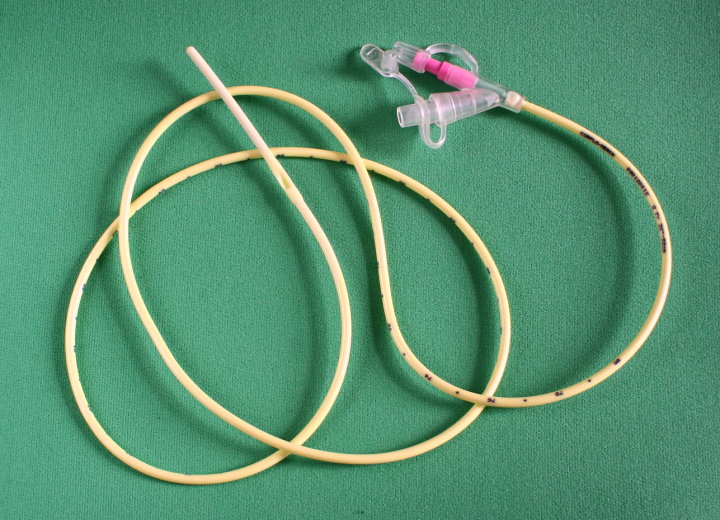
Placement of a tube for nutrient ingestion in the nose.
Percutaneous endoscopic gastrostomy (PEG)
Endoscopic placement of a tube through the abdominal wall directly into the stomach.
Jejunostomy (J-tube)/ PEJ
Surgical/ endoscopic placement of a tube for nutrient ingestion through the abdominal wall directly into the jejunum.
Cervical esophagoscopy/pharyngoscopy
Surgical placement of a tube through the lateral pharyngeal wall directly into the upper oesophagus.
Total parenteral feeding (TPN)
Administration of nutrients through a central vein.
Intravenous hydration
Administration of fluids for hydration only.


Enteral Feeding
Indications
Contraindications
·   1 to 2 weeks of no nutrient intake (unable to orally ingest nutrients/ unsafe oral feeding).
·   Can be temporary/permanent.
·   Placing tubes into the stomach allows for digestion at a controlled rate (rather than into the small intestine).
·   Mechanical obstructions.
·   Severe vomiting/ upper GI bleeding
·   If the patient is not able to ingest nutrients via the GI tract.


Nasogastric Feeding (NG-tube)
Indications
·   Indicated when enteral feeding is required for a short period of time i.e. recovery of swallow function is expected.
·   Typically used for under 30 days.

Contra-indications
·   Nasal obstruction
·   Confused/agitated patients – may not cooperate/ tolerate the discomfort of tube insertion as placement can be quiet traumatic.

Placement of the NG-tube
·   Patients are asked to swallow the tube as it is pushed through the nose into the stomach.

Complications
·   GI and mechanical complications can occur.
·   Vomiting, cramping, diarrhea, risk of self-extubation
·   Risk of aspiration if the tube is inappropriately placed.

Gastrostomy Feeding (e.g. PEG)
Surgical opening into the stomach to allow the placement of a feeding tube. Gastrostomy is the most prevalent type of long term enteral feeding.

Indications
·   Patients who cannot/ will not orally eat.
·   If the resumption of oral feeding is likely to take longer than 30 days.
·   May be used for patirents with dysphagia.
·   PEG = non surgical (a fibreoptic endoscope is used).

Contra-indications
·   Overall medical condition of the patient i.e. are they medically stable.
·   Patients with severe irreversible illnesses, especially the elderly.


Jejunostomy
·   For patients who have a previous history of tube-feeding aspiration pneumonia, reflux esophagitis, or when there is a reason the stomach cannot be used.
·   Often used with patient swho have severe reflux.
·   Diarrhea is a common complication due to the patients difficulty in regulating absorption via the intestine.

Intravenous Nutrition
·   Used when patients have a non-functioning GI tract.

Complications of Enteral feeding
Aspiration
1.     Aspirtion of oral secretions – tube feeding may not eliminate the primary source of pulmonary aspiration in patients with severe dysphagia.
2.     Reflux aspiration – increased reflux may occur with NG feeding since the tube passes through the pharynx and may lead to transient relaxation of the LES.
3.     Body position aspiration – patients need to be at 45 degrees when tube fed if they are in a supine position they are at risk of tracheal aspiration.
Enteral feeding regimens
1.     Bolus feeding – administration of formula intermittently throughout the day using a syringe, pump or gravity. Syringe feeding = rapid + can be associated with GI reflux and vomiting. It  does however ‘normalise’ the digestive system.
2.     Continuous feeding – speed of feeding is controlled with a pump/ gravity. Roubenoff (1992) recommend slow continuous drip feeding to reduce the risk of aspiration regardless of placement. Feeding is slow. But nutrient absorption is enhanced. A gradual progression from continuous to bolus feeding is recommended to normalise the bodies consumption of nutrients.
Diarrhoea
·   Common complication of enteral feeding
Medications
·   Drug absorption and metabolism may be altered/ interrupted during tube feeding.


Deciding on non-oral feeding
1.     Comprehensive formal/ informal dysphagia assessment – gain information on the patients medical condition, physiology and personal attributes.
2.     Patient’s preferences/ capacity – does the patient have capacity to make a decision regarding feeding options.
3.     Prognosis for recovery

Legal/ Ethical issues
·   Quille (1992) tube feeding is not viewed as ‘basic, humane care that must always be provided’
·   If a patient pulls out a feeding tube, it is a non-verbal indicator that they do not give consent for the tube.
·   PEG tubes are less likely than NG-tubes to be pulled out.

How to progress form non-oral to oral nutrition
Groher and Mckaig (1995)
·   Suggest that bolus feeding continues for 3-5 days before oral trials are attempted, to allow the stomach time to ‘stretch’ and reinitiate the hunger cycle.
·   They recommend that one meal be introduced orally for 1 week, with more meals added as the patient is able to tolerate oral feeding.
·   Tube feedings are adjusted depending on the patients oral intake.
·   The introduction of oral food requires consultation with the medical team (nurse, physician, dietician, pharmacist) to monitor health, nutritional status and any significant changes.
·   Criteria necessary for increased oral nutrition= indicators of nutritional status (fluid+calorific intake), and overall health status, such as strength, endurance and respiratory condition.

Friday, 31 May 2013

Reflective log 29.05.13 – Chest infection


1. Think of a recent therapy session or event.
Nursing staff had reported that a patient was coughing when drinking. The patient had sounded chesty the day before but I had not seen any signs of aspiration. The patient was asthmatic and had not previously tolerated an NG-tube.

2. Describe the session/experience
I observed the patient at lunch. They were able to manage a puree meal and a yogurt without signs of aspiration but coughed post swallow on water. Their eyes watered when they swallowed the water and they needed three swallows to clear a single sip. Previously they had needed two swallows and had not coughed/ no eye watering.

I trialled a thickened grade 1 fresubin drink – there were no signs of aspiration. I therefore put the patient on syrup fluids and recommended that fluids be stopped if they were having difficulties since they were regularly getting sub-cut fluids. As the patient did not tolerate NG-feeding and managed to eat puree consistencies safely I left them on a puree diet. The doctor decided to give the patient antibiotics for her chest infection. The chest infection may have caused her swallow to deteriorate.


3. What did this session make you feel?
I felt that I had little choice about whether to allow the patient to continue eating/ drinking. However my supervisor advised that if the patients swallowing was very unsafe or their chest infection progressed they may be less alert and may be able to tolerate NG-feeding.

4. What would you want to change, and why?
I would want to monitor stable dysphagia patients and proactively ask the nurses about their swallowing since they see the patients throughout the day.

5. What has this session has taught you?
- Asthmatic patients may get chest infections not related to aspiration.
- To continually monitor dysphagia patients and communicate with the nursing staff.

Tuesday, 28 May 2013

A day in the life of a dietician

Recently for one of my dysphagia competencies i spent the day shadowing a dietician on the stroke and elderly care units. Here's what i found out.......


A Day in the life of a Dietician

Examples of joint working
       1. Weaning a patient from PEG feeding to Oral feeding.
·   If the patient is able to manage at least 3 days of good oral intake(>50% of required daily intake) the dieticians may agree to reduce their PEG feed in order to stimulate appetite.
·   A PEG may be used simply for fluids/hydration needs.
1.    Supplements
·   E.g. for a patient who will not tolerate an NG-feed and is not eating enough of a puree diet (with fluids often the doctor will prescribe sub-cut fluids).
·   E.g. supplements which are the right consistency for a patient to swallow.
·   On the stroke unit all patients on a puree diet are referred to the dieticians.

Interpreting Dieticians Clinical Notes
A.     Assessment – e.g. weight etc.
B.     Bloods (e.g. electrolytes, raised CRP/WBC = inflammatory/ infection marker)
C.     Clinical e.g. prescriptions
D.    Dietary – observation chart
E.     Estimated requirements
F.     Family
G.     Goals
H.    Aims/ plan

Body Mass Index

BMI = weight (kg)/ height (m2)
<18.5 = underweight (probable poor protein energy status
20 – 25 = desirable weight
25- 30  = overweight

Estimating Nutritional requirements
1.     Calculate the approximate basal metabolic rate (BMR)
2.     Determine the patients metabolic state e.g. higher if metabolically stressed due to infection/ surgery etc… (increased energy requirements due to disease processes).
3.     Add an activity factor i.e. bed bound immobile/ bed bound mobile (sitting)/ mobile on the ward.
4.     Determine the goals of treatment e.g. maintenance/ weight gain.

Re-feeding syndrome

Definition: - a group of clinical symptoms/signs that can occur when nutrition is reintroduced to a malnourished individual.

·   Over-rapid/ unbalanced provision of oral, enteral or parenteral nutrition can lead to biochemical abnormalities (elecrolyte disturbances).

Electrolytes
Respiratory symptoms
Neuro-muscular symptoms
Low Phosphorus (P)
Acute ventilatory failure
Lethargy
Weakness/paralysis
Confusion
Coma
Diaphragm weakness
Low Potassium (K)
Respiratory depression
Paralysis
Weakness
Muscle breakdown
Low Magnesium (Mg)
Respiratory depression
Ataxia
Confusion
Muscle tremors
Tetany
Fluid/glucose
Respiratory depression/
Pulmonary oedema
Coma


Feedback from the dieticians
1.    Refer patients to the dieticians more regularly if you feel they are at risk of malnutrition/ re-feeding syndrome.
2.    Find out patients’ food/drink preferences.
3.    Tea is a diuretic, so if encouraging fluids due to dehydration encourage other drinks as well.
4.    Information to hand over to dieticians: a) Consistencies the patient can manage b) Prognosis for their swallowing function.
5.    Fill out food and fluid charts and encourage the nursing team to as well. Include if the patient has refused food so that the dieticians know that someone hasn’t forgotten to record the data.
6.    SLT’s can prescribe build up soup e.g. the cal shake (made with milk).
7.    There are thickened supplement dinks in grade 1 and 2 however they are slightly thinner than thickened fluids of the same grade.